What is Microsoft Fabric Lakehouse?
Published June 19, 2026
Organizations today are drowning in data. Transactional systems, CRM platforms, ERP applications, IoT devices, customer interactions, and third-party data sources generate massive volumes of information every second. While businesses have more data than ever before, extracting meaningful insights remains a challenge because data often exists across disconnected systems, warehouses, lakes, and reporting environments.
Traditional data warehouses excel at structured analytics but struggle with unstructured and semi-structured data. Data lakes offer scalability and flexibility but often lack governance, performance optimization, and business-friendly analytics capabilities. As organizations seek to modernize their analytics ecosystems, the need for a unified architecture has become increasingly important.
This is where the Microsoft Fabric Lakehouse emerges as a transformative solution.
Microsoft Fabric introduces a modern lakehouse architecture that combines the scalability of data lakes with the performance and reliability of enterprise data warehouses. Built on the foundation of OneLake, Microsoft Fabric Lakehouse enables organizations to store, process, analyze, and visualize data within a single integrated platform.
Whether you're building enterprise analytics solutions, modernizing legacy data warehouses, implementing real-time reporting, or preparing data for AI initiatives, Microsoft Fabric Lakehouse provides the foundation for a future-ready data strategy.
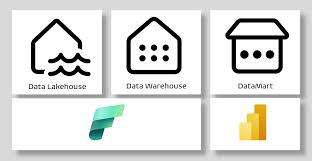
A Microsoft Fabric Lakehouse is a unified data architecture that combines the best characteristics of:
Unlike traditional architectures that require separate systems for storage, processing, and analytics, Fabric Lakehouse centralizes these capabilities within a single environment.
The Lakehouse stores data in open Delta Parquet formats, allowing organizations to work with structured, semi-structured, and unstructured data while maintaining enterprise-grade governance and performance.
At its core, Microsoft Fabric Lakehouse is designed to eliminate data silos and create a single source of truth across the enterprise.
Many organizations still rely on fragmented data ecosystems consisting of SQL Data Warehouses, Azure Data Lake Storage, ETL Tools, Reporting Platforms, Data Science Environments, and Governance Solutions. This fragmented approach creates several challenges:
Data Duplication
The same data is copied across multiple systems, increasing storage costs and management complexity.
Slow Analytics
Teams spend more time moving data than analyzing it.
Governance Challenges
Maintaining security, compliance, and lineage across disconnected platforms becomes increasingly difficult.
Rising Infrastructure Costs
Multiple tools introduce licensing, maintenance, and operational expenses.
Delayed Decision-Making
Business users often wait hours or days for access to critical insights.
Microsoft Fabric Lakehouse addresses these challenges by creating a unified analytics foundation.
The Fabric Lakehouse architecture is built around OneLake, Microsoft's unified data storage layer.
This architecture enables organizations to process, analyze, and consume data without moving it across multiple platforms.
OneLake
OneLake serves as the central storage repository for Microsoft Fabric. Similar to how OneDrive functions for Office applications, OneLake acts as a single data repository for all analytics workloads.
Key benefits include:
Organizations gain a single logical data lake spanning the entire enterprise.
Delta Tables
Microsoft Fabric Lakehouse uses Delta Lake technology to provide ACID transactions, schema enforcement, data versioning, reliable updates, and faster query performance. Delta tables combine the flexibility of data lakes with the reliability of data warehouses.
Apache Spark Engine
Fabric Lakehouse includes native Spark support for data engineering, machine learning, large-scale transformations, data preparation, and advanced analytics. Data engineers can build scalable pipelines without managing infrastructure.
SQL Analytics Endpoint
Business analysts and reporting teams can query lakehouse data using familiar SQL tools, leading to faster adoption, enterprise reporting, ad-hoc analysis, and seamless integration with BI tools. This capability bridges the gap between technical and business users.
A modern Fabric Lakehouse architecture consists of multiple layers coordinating data from creation to visualization.
Data Ingestion Layer
Data enters the platform from ERP Systems, CRM Platforms, Databases, APIs, IoT Devices, SaaS Applications, and Cloud Storage.
Storage Layer
OneLake stores all enterprise data using open formats, maximizing scalability, security, accessibility, and cost efficiency.
Processing Layer
Spark engines transform raw data into business-ready datasets through common processes like data cleansing, data enrichment, aggregation, and standardization.
Semantic Layer
Semantic models provide consistent business definitions across reports and dashboards, mapping vital KPIs such as Revenue, Customer Lifetime Value, Gross Margin, and Inventory Turnover.
Consumption Layer
Users access targeted data arrays securely through Power BI, Excel, APIs, AI Applications, and Machine Learning Models.
| Feature | Microsoft Fabric Lakehouse | Traditional Data Warehouse |
|---|---|---|
| Structured Data | Yes | Yes |
| Semi-Structured Data | Yes | Limited |
| Unstructured Data | Yes | No |
| Real-Time Analytics | Yes | Limited |
| AI Readiness | High | Medium |
| Scalability | High | Medium |
| Storage Costs | Lower | Higher |
| Open Formats | Yes | No |
| Data Science Support | Native | Limited |
The Lakehouse model offers significantly greater flexibility for modern analytics initiatives compared to restrictive legacy setups.
Single Source of Truth
All teams access the same governed data repository. This improves consistency across analytics and reporting initiatives.
Reduced Data Movement
Organizations no longer need to move data between multiple platforms, leading to lower costs, faster analytics, and better overall governance frameworks.
Faster Analytics
Direct access to unified datasets accelerates reporting and dashboard development without long synchronization loops.
Enhanced Scalability
Fabric Lakehouse can support millions of records, petabyte-scale environments, and enterprise-wide analytics programs effortlessly.
Improved Governance
Centralized management enables granular security controls, data lineage mapping, compliance monitoring, and structural access management.
AI and Machine Learning Readiness
Lakehouse architectures provide the secure, clean foundation required for predictive analytics, generative AI modeling, machine learning, and intelligent automation.
Retail Analytics
Retail organizations use Lakehouse architectures to unify POS Data, Inventory Systems, Ecommerce Platforms, and Customer Data, driving improved forecasting and customer insights.
Financial Analytics
Financial institutions leverage Lakehouse solutions for secure risk analysis, regulatory reporting, profitability analysis, and rapid fraud detection.
Manufacturing Analytics
Manufacturers utilize Fabric Lakehouse to analyze production metrics, supply chain performance, equipment monitoring telemetry, and automated quality assurance tasks.
Healthcare Analytics
Healthcare providers safely integrate patient records, operational data, financial systems, and clinical analytics while maintaining strict governance and compliance requirements.
Ecommerce Intelligence
Lakehouse architectures enable detailed customer journey analysis, multi-channel marketing attribution, product performance tracking, and continuous revenue optimization.
One of the most powerful advantages of Microsoft Fabric is its native integration with Power BI. Organizations can build Direct Lake semantic models, create real-time dashboards, enable self-service analytics, and drastically reduce dataset refresh times.
This integration allows business users to consume analytics directly from lakehouse data without complex data movement or caching protocols.
Adopt Medallion Architecture
Organize data logically to ensure structured progression:
Establish Governance Early
Define explicit data ownership parameters, security policies, access controls, and data quality standards before scaling corporate workloads.
Design for Scalability
Architect long-term solutions that can seamlessly support future growth across data volume, user adoption, and demanding analytics workloads.
Optimize Data Models
Well-designed star-schema semantic models directly improve query performance and final user reporting experiences.
Organizations modernizing their setups often encounter specific roadblocks:
Legacy System Complexity
Migrating decades of fragmented legacy data requires careful planning, profiling, and staged execution blueprints.
Data Quality Issues
Poor upstream source data structures directly impact down-stream analytics outcomes if validation is not built in early.
Governance Requirements
Stringent enterprise security policies and compliance mandates must remain a priority during architecture shifts.
Skill Gaps
Internal teams may require specialized upskilling in PySpark, Delta Lake mechanics, and modern Fabric tenant administration.
Working alongside experienced Microsoft Fabric consultants can significantly reduce implementation risk and time to market.
KnexBI helps organizations design, implement, optimize, and scale Microsoft Fabric Lakehouse solutions that drive measurable business outcomes. Our comprehensive Microsoft Fabric services include:
Whether you're starting a fresh Fabric initiative or migrating away from legacy platforms, our consultants help accelerate adoption while minimizing operational risk.
As organizations continue to invest heavily in AI, advanced analytics, and real-time decision-making, traditional data architectures are becoming increasingly difficult and expensive to maintain. Microsoft Fabric Lakehouse provides a modern foundation that unifies storage, analytics, governance, and business intelligence within a single platform.
By combining the flexibility of data lakes with the reliability of enterprise data warehouses, organizations can reduce complexity, improve overall performance, lower software costs, and unlock greater long-term value from their data assets.
For enterprises pursuing comprehensive digital transformation, data modernization, and AI readiness, Microsoft Fabric Lakehouse is rapidly becoming the architecture of choice.